
Two turf quotes can look the same on paper and turn out completely different in your yard. The difference is almost always in the parts you can't see: the base, the slope, the seams and the people doing the work. Hiring an installer is the biggest decision in the project, so before you hire, these are the right questions to ask potential contractors, and the answers to listen for.
Ask for proof of liability insurance and any local license your city requires. A company without insurance puts the risk on you.
Many companies sell the job and hand it to whoever is available. Ask who will actually be in your yard, how they were trained and which installation methods they use. A knowledgeable installer on site matters more than a good salesperson.
Ask to see photos of finished yards and, if possible, projects similar to yours in size and use. Customers who tell you how a lawn held up after a year say more about the quality of their work than photos from day one.
The quote should name the product, its pile height, face weight and backing. Request samples and the spec sheet; "premium grass" isn't a product name. A denser turf with a higher face weight keeps the turf fibers upright longer. It's important to ask this early, because the artificial lawn is what you'll look at every day.
A front lawn, a dog run, a play area for children and pets, and a putting green with a true ball roll each need a different product. A good contractor asks how you'll use the space before recommending anything. An installer should be able to explain why one turf system fits better than another.
Most landscape grass blades are polyethylene: soft and natural-looking. Nylon (polyamide) is the toughest fibre and is common on putting greens; polypropylene is cheaper and wears faster under heavy foot traffic. Ask about the materials used and why.
Silica sand, coated sand or zeolite for pets: the type and amount affect how water passes, odor and how the surface feels. See what is infill for artificial turf.
Listen for: removing the existing lawn and soil, a compacted crushed-aggregate base in layers, and a fine leveling layer on top. If the answer is "we lay it on the dirt," walk away. Read the best base for artificial turf.
Ask how water will leave the yard and what they do in low spots. In South Florida, proper drainage is what makes a residential lawn long-lasting; poor drainage is what makes one smell.
Good answers when installing the turf: seam tape and adhesive, grain running the same way on every piece, and edges nailed around the perimeter or glued along concrete.
Most residential jobs take one to three days. Ask specifically who calls Sunshine 811 to mark utilities, who caps the sprinklers and who handles HOA paperwork.
Removal and disposal of the old grass, base materials, the product, sand or zeolite, edging and cleanup. Compare quotes line by line, not just the total.
There are usually two: the manufacturer's on the product and the installer's on the work. Get both in writing, and see what an artificial turf warranty covers.
An honest answer: brushing, rinsing, occasional top-ups, and the basic care that keeps the coverage valid.
Choosing the right installer matters as much as choosing artificial grass itself. The same quality of artificial grass can last fifteen years or fail in two, depending on who puts it in. Before choosing an artificial turf company, weigh these factors to consider:
What materials do I need to install artificial turf? The product, base aggregate, weed barrier, seam tape and adhesive, nails, and sand or zeolite on top, plus a plate compactor. A professional crew brings all of it.
Can I install artificial grass myself? On a small, simple area, yes; see how to lay artificial grass. Installing turf yourself saves labor, but not the equipment or base costs, and on most yards a professional job lasts longer.
What happens to the lawn when it rains? A well-installed lawn drains through the backing into the base and is usable soon after. Puddles mean a poor base.
Is synthetic grass better than a traditional lawn? For most busy Florida yards, yes: no mowing, watering or fertilizer. Natural sod stays cooler in full sun. The benefits of artificial grass depend on a good installation.
What are the common problems? Heat in full sun, odors in poorly drained pet areas, and seams or edges that lift on bad installations. The right company prevents most of them.
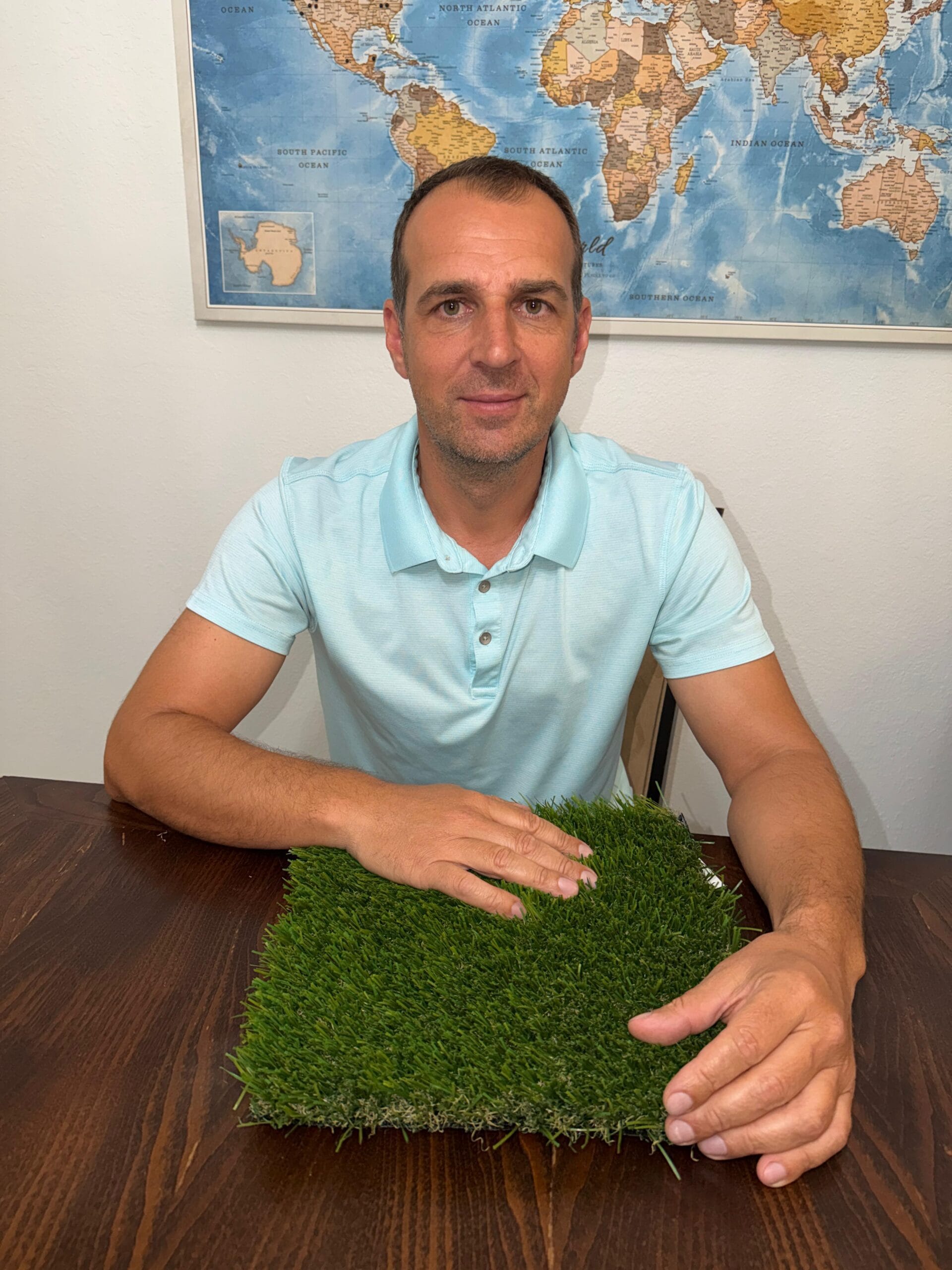
At Smart Synthetic Turf, our founder Catalin Chiticaru is a Synthetic Turf Council certified installer. Every project starts with a free on-site visit, real samples and a written quote that names the product, the base and the warranty. If you're comparing companies in Boca Raton or anywhere in Palm Beach and Broward counties, call (561) 210-0999 and ask us all fourteen. If an installer's answers are vague, keep looking before you choose an artificial grass company; you should get quality products and a quote you can compare.