What goes under artificial grass? The best base for Florida soil

What goes under artificial grass? The best base for Florida soil

Short answer: a compacted base of crushed aggregate, graded so water runs off and drains through. The base is what keeps artificial turf flat, firm and dry for years. It matters more than the turf you choose.

When an installation fails, the turf usually gets the blame, but the cause is almost always underneath: a base that was too thin, not compacted, or built from the wrong material. Here is what goes under artificial grass when it's done right, and why Florida soil needs a little extra thought.

The layers under artificial grass

  1. Native soil, excavated. The old grass, roots and loose topsoil come out, usually a few inches deep, so the finished turf sits at the right height next to patios and walkways.
  2. Weed barrier (where needed). A geotextile fabric over the soil keeps the base from mixing into it and helps keep weeds down.
  3. Sub-base of crushed aggregate. Angular crushed stone, laid in layers and compacted with a plate compactor. The angular pieces lock together, so the base stays firm but still lets water through.
  4. Leveling layer. A thin layer of fine crushed material, screeded and compacted, gives a smooth surface so the turf doesn't show bumps.
  5. The turf and infill. The turf is laid, seamed and secured, then infilled and brushed.

What is the best base for artificial turf in Florida?

Most South Florida yards sit on sandy soil that drains well, but many lots also have a high water table, low spots and heavy summer rain. A good base here is a compacted crushed-aggregate base, graded with a slight slope away from the house, so water both drains through and runs off. In low areas or yards that hold water, extra drainage is added before the base goes down.

What I don't recommend: laying turf straight on sand or soil, using round pea gravel (it rolls and shifts underfoot), or using only sand as the base. They're cheaper on day one and cost more later.

How deep should the base be?

For a residential lawn the base is typically a few inches of compacted aggregate; heavy-use areas, dog runs and putting greens may need more, and soft or wet soil needs more again. The right depth depends on the soil, the use and the drainage, which is why we check the yard before quoting.

Bases for special areas

  • Pet areas: a base that drains quickly and antimicrobial infill, so urine doesn't sit in the system. See our pet turf.
  • Putting greens: a firmer, carefully contoured base for a true roll. See our putting greens.
  • Concrete, patios and rooftops: no aggregate; the turf goes over the slab with a drainage or foam pad. See artificial grass on concrete.

Base materials for artificial grass, compared

  • Crushed rock base (road base): angular crushed stone with fines, the most common base material for artificial grass. It compacts into a firm, even layer that still lets water pass. In the western US installers call it class II road base; in Florida, crushed limerock or crushed concrete aggregate is often used.
  • Decomposed granite or fine screenings: used as the thin top layer to level the surface before laying the turf.
  • Pea gravel: drains well but doesn't compact; it shifts and leaves uneven turf. Not a base on its own.
  • Sand: fine for a thin layer of sand over a compacted base in some installs, but not as the whole base: it washes out and ruts.

Why proper drainage matters for artificial turf

Drainage is one of the main jobs of the base. Rain and pet urine must move through the turf and into the base, then away. A properly prepared base layer allows water to pass and keeps the turf in place; a poor base holds water, causes odors and lets the turf move. Good drainage under artificial grass matters just as much as the turf itself, and even high-quality turf can't fix a base that doesn't drain.

Base preparation: how we build an artificial turf base

Every artificial grass installation starts with base preparation, and the right base material does three jobs: it gives the turf a strong base that won't settle, it lets water pass through, and it keeps the turf in place. Here is how a proper base for artificial grass is built under a typical lawn:

  1. Remove the existing grass and roots, so nothing grows or rots underneath artificial turf.
  2. Grade the soil so water flows away from the house and the sub base sits evenly.
  3. Add weed barrier where the soil needs it.
  4. Spread the base material in layers and compact each one with a plate compactor; a deeper base helps prevent settling in soft or wet soil.
  5. Add a thin layer of fine material on top and compact it again, so the surface before laying the turf is smooth and even.

A turf base built this way allows water to pass straight through the synthetic turf and into the ground, which is why a proper base drains better than natural grass in heavy rain. Skip a step and you get uneven turf, puddles and seams that move. Installing turf without a proper base is the most common reason an artificial lawn fails early.

Is class II base or limerock the best base for artificial grass?

Both work when they are compacted properly. Class II base is the term used for road base in the western US; in South Florida, installers more often use crushed limerock or crushed concrete aggregate, which compact well and drain. The best base to put under turf is the one that matches your soil, your drainage and how the lawn is used, installed at the right depth. The artificial turf base for a dog run, for example, needs faster drainage than one under a front lawn.

More questions about the base

Can I put artificial turf directly on dirt? You can, but you shouldn't: without a solid base, turf can create dips, wrinkles and drainage problems within a season.

What's the best base to put under artificial grass for dogs? A compacted base that drains fast, with antimicrobial infill on top.

Does landscape turf need the same base as a putting green? No; a putting green needs a firmer, contoured base.

If you're thinking about installing artificial grass, choose the right base and the right materials first. Every synthetic grass lawn requires a good foundation; base materials and professional installation are what make a flawless artificial grass project, and our turf installers handle the whole artificial turf project, from excavation to the last brush of infill.

The real takeaway

The base is the foundation of your lawn. Excavate, compact, grade and drain properly, and artificial grass stays flat and fresh for years. Skip it, and no turf will save the installation. Learn more about our artificial turf installation.
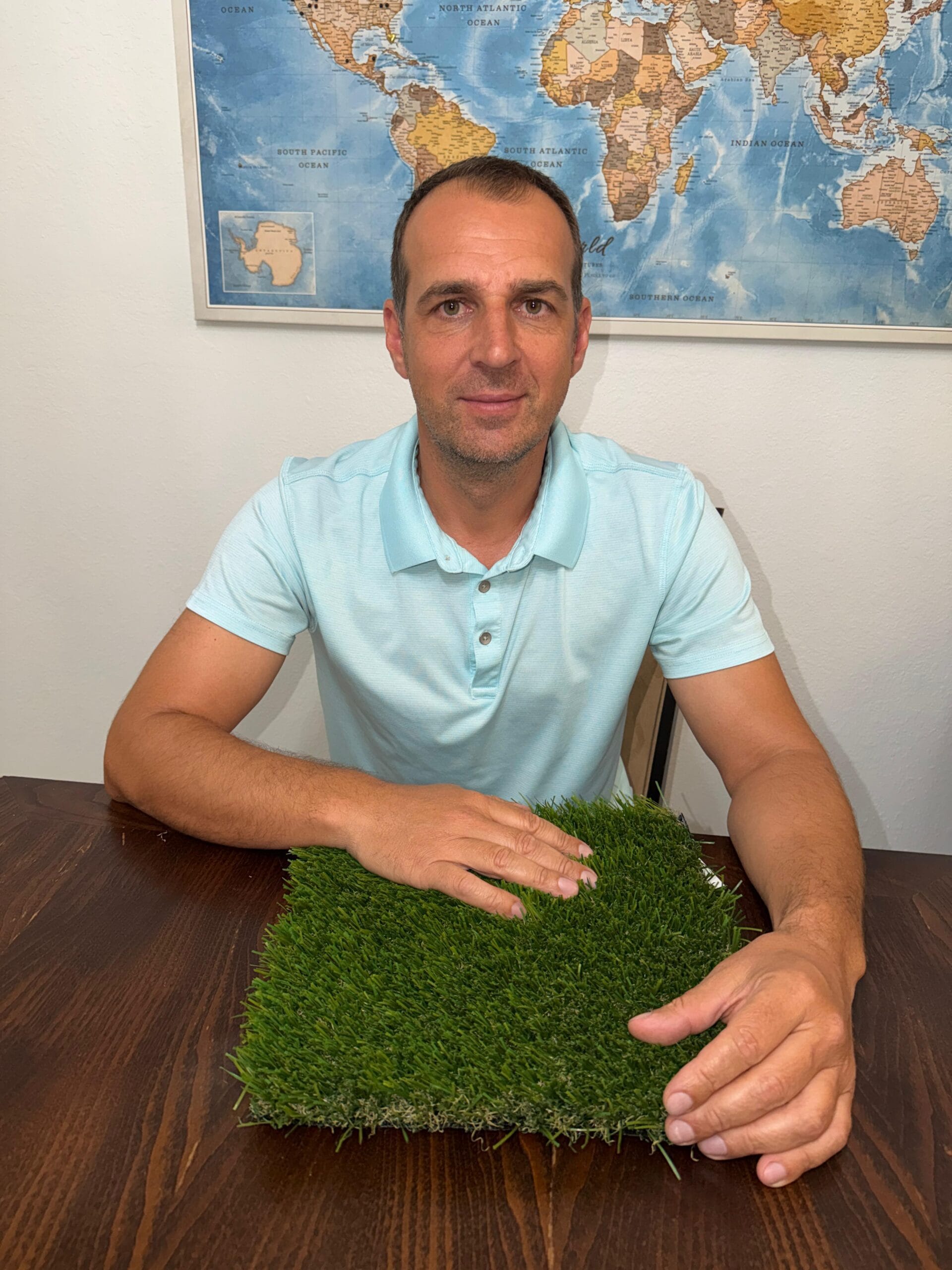
Catalin Chiticaru Florida Artificial Grass Expert and CEO of Smart Synthetic Turf
Answers from artificial grass expert

Catalin Chiticaru

CEO of Smart Synthetic Turf LLC
Synthetic Turf Sports Construction Expert, Synthetic Turf Council Certified Installer
I’m a synthetic turf specialist with nearly 20 years of experience transforming landscapes from residential lawns to athletic fields. In regions like South Florida — with intense sun, heat, and humidity — premium materials and precise installation techniques are what distinguish turf that lasts from turf that fails. My approach combines practical field knowledge with a deep understanding of how surface preparation, drainage, and material choices impact long-term performance. I focus on solutions that balance durability, aesthetics, and low maintenance — not just what looks good on day one, but what performs reliably over years.

Monday to Saturday

Get a FREE Quote
You will receive a FREE, no-obligation quote!
Smart Synthetic Turf LLC logo
Located in Boca Raton, FL, our company is the leading provider of premium artificial grass and synthetic turf solutions in the state. We offer lush, maintenance-free lawns for residential, commercial, and recreational purposes.
© 2026 - Smart Synthetic Turf