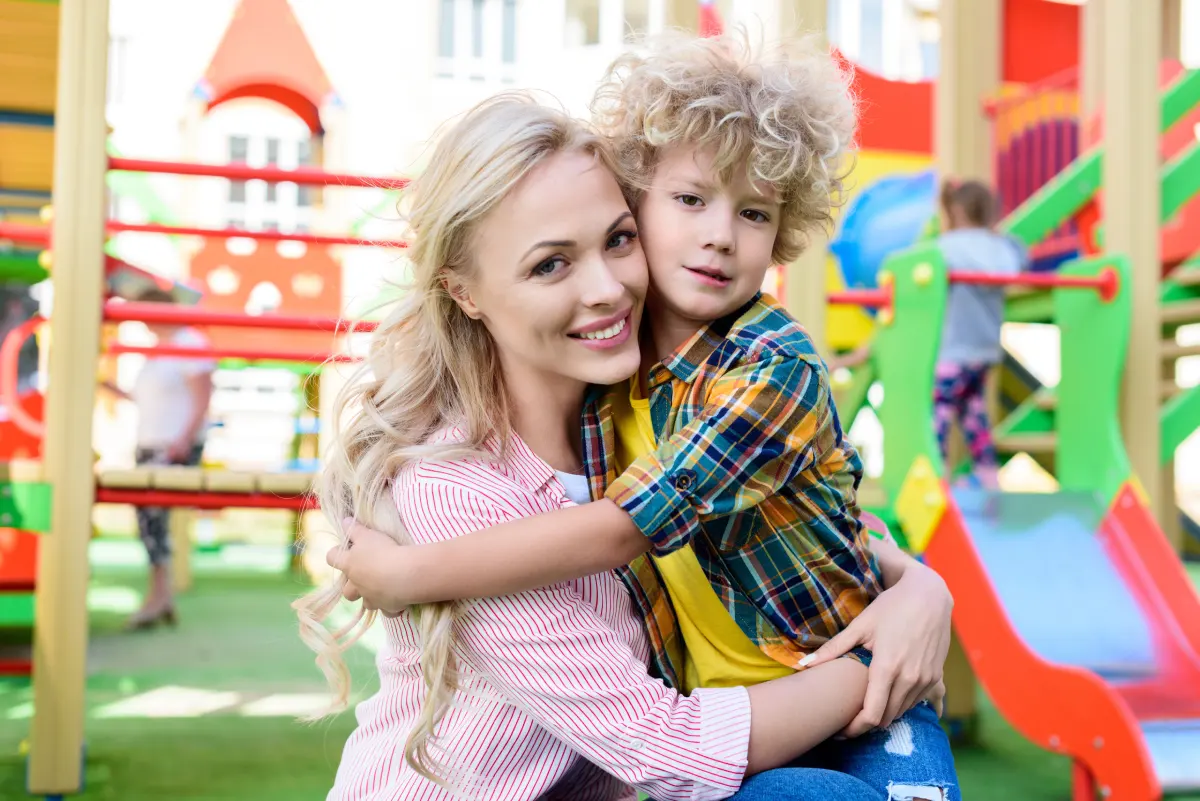
Parents want a place to play that's soft, clean and safe, and still usable the day after a storm. That's why more homes, schools and daycares in South Florida are replacing wood chips, sand and worn grass with synthetic turf. Here's why it works, and what to ask for so the surface actually protects a kid who falls.
Under swings, slides and climbers, the grass goes over a foam pad or shock-absorbing underlayment. Its thickness is chosen for the fall height of the playground equipment, and the system should be tested to the ASTM F1292 standard for impact attenuation; IPEMA certification is one way manufacturers document it. Turf alone, without that layer, is not enough.
Ask for lead-free fibers and a non-toxic, antimicrobial infill, such as an acrylic-coated sand like Envirofill, which helps keep the surface sanitary. Some playground products also have antistatic properties, so kids don't get a shock from static electricity on the slide. Avoid black crumb rubber in a backyard: it gets hot and tracks indoors.
Synthetic grass gets warm in direct sun. Shade, a lighter color and a rinse on hot afternoons keep it comfortable.
Natural grass under swings and slides wears down to dirt within months, turns to mud after rain and gets patchy where children run. Playground artificial grass stays even and clean under heavy use, so a grass playground keeps its looks, and with the right cushioning it's a safer place to land than packed dirt. It also rinses clean, which matters for children and pets.
Quality materials matter more than the brand name: the same grass products perform very differently depending on the turf systems underneath, so ask to see each turf product's spec sheet. For schools, parks and other public sites, ask for a system certified for the equipment it sits under.
Is artificial turf good for playgrounds? Yes. Grass for a playground at home or at a school works well with a shock-absorbing layer underneath.
What do you put under artificial turf for a playground? A compacted base that drains, then a foam or rubber underlayment rated for the equipment, then the turf.
Can I lay artificial turf on dirt for a backyard play area? Not if you want it to last; it needs a base and, under equipment, cushioning.
Is playground grass safe for kids? Quality, lead-free turf with proper cushioning is a safe environment for safe play, and much cleaner than sand, wood chips or real grass.
We install playground turf for homes, schools, daycares, HOA amenity areas and parks in Boca Raton and across South Florida, and residential turf that combines play space with landscape areas. Every project starts with the equipment and its height, then the cushioning, the turf and the base. For a yard shared with dogs, see our pet turf; for cleaning and upkeep, see artificial turf cleaning.
Call (561) 210-0999 for a free estimate on a safe playground surface.