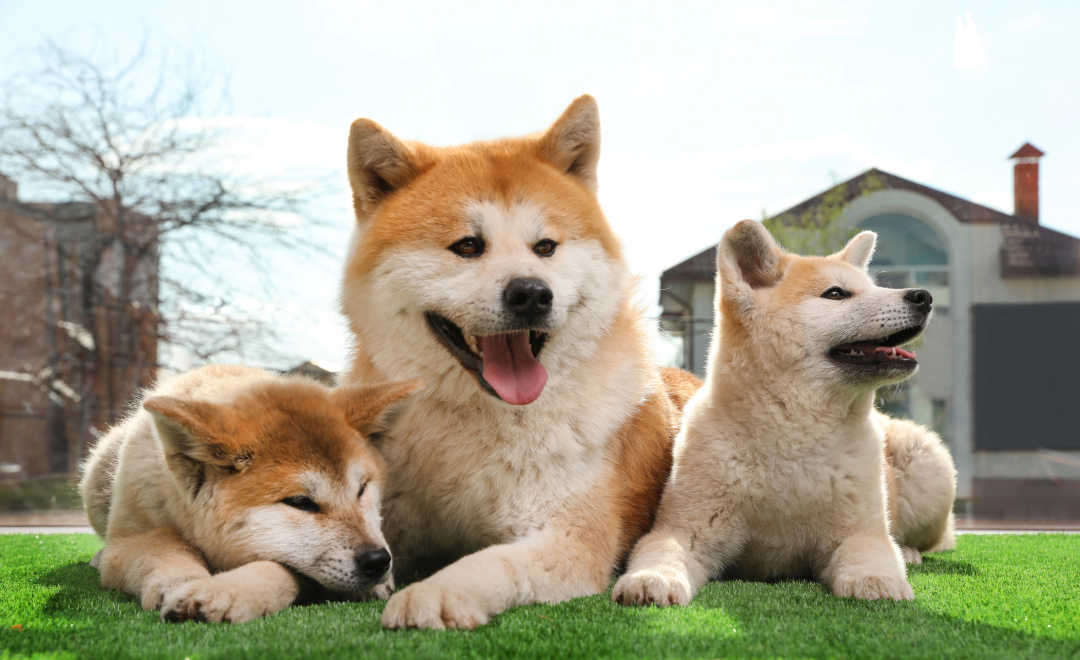
Most people with dogs who call us aren't looking for a nicer lawn. They're tired of muddy paws on the kitchen floor, yellow urine spots, holes along the fence and a strip of sand where the dog patrols every day. Synthetic turf fixes most of that. Below are the real benefits, the limits you should know about, and how to choose turf that suits your dog, from an installer's point of view.
Rain drains straight through pet-friendly turf, so there's nothing for your dog to track inside, even after a South Florida summer storm. Every paw that comes through the door is as clean as it went out. For most families this is the benefit they notice first.
Dog urine burns natural grass and leaves yellow spots that never quite grow back. A synthetic lawn doesn't die, so the yard stays green where your dog goes. Urine passes through the turf into the base, and a regular rinse keeps the area fresh.
Dogs that dig or run the same route along the fence wear a lawn down to dirt. The new surface is secured at the edges and laid on a compacted base, so the surface stays even and most dogs give up digging after a few tries.
A Florida lawn needs fertilizer, weed killer and pest control that dogs walk through and lick off their feet. None of that is needed here.
Without tall, damp grass and bare soil, fleas and ticks have fewer places to hide.
Pick up solid waste, rinse with a hose and blow off leaves. Good pet turf drains fast enough that this simple routine is all it needs most weeks.
No mowing, no watering and no re-sodding every spring. The grass provides a clean, dry place to play every day of the year, and you get your weekends back.
Here's how the two compare, and where the advantages of artificial grass show up in a yard where dogs spend their day:
For pet owners, drainage is the difference between a yard that stays fresh and one that smells. Good artificial grass drainage for dogs comes from three layers working together:
That's why we talk about pet turf systems rather than products: the backing, infill and base are chosen together, and a good product on the wrong base still fails. Learn more on our pet turf installation page, and read is artificial turf safe for dogs for the safety questions.
Landscape products and pet products look alike in a sample, but they're built differently. Pet products use a fully permeable backing, a resilient fiber that springs back after dogs run on it, and a thatch layer that hides wear. Many also carry an antimicrobial treatment in the backing or the infill. None of this shows on day one; it shows a year later, when the yard still drains and still smells like a yard.
Ask for the product's spec sheet before you buy. It should list the backing type, the drainage rate, the pile height and the face weight. If an installer can't tell you those numbers, keep looking.
Choosing the right artificial grass starts with how your dog uses the yard. Not all turf products are made for pets, so when you compare grass products or pick a product for a dog yard, these are the features I'd check:
A medium pile, around 1 1/4 to 1 3/4 inches, with dense fibers works in most yards: soft on every paw, tough enough for running and easy to rinse clean. Very long landscape turf looks lush but traps more debris; very short turf feels harder underfoot.
Hole-punched backings drain only through the holes. Fully permeable backings let urine pass through the whole surface, which is why they're the standard for artificial grass for pets.
Most pet installations use zeolite or antimicrobial coated infill. Some infill-free artificial grass is made for dog areas and patios; it's easier to clean but feels less cushioned. Ask which suits your dog and your space.
In full sun, a lighter, heat-reducing synthetic grass and some shade keep the yard comfortable on summer afternoons.
Ask how deep the base will be, which infill they use for pets and how the edges are secured. The best artificial grass for dogs still fails on a thin base, so the installation matters as much as the product.
You don't have to cover the whole yard. Each of these is a different turf solution:
All of these options need the right base and drainage underneath, so look at the whole system, not just the product.
Many dogs walk onto the new lawn and start playing. A few are unsure at first, especially older dogs who have used the same patch of soil for years. A few things help:
Pros: no mud, no urine spots, no holes, no lawn chemicals, fewer pests, easy cleaning, green all year.
Cons: it gets warmer than sod in the sun, it costs more up front, pet areas need regular rinsing, and damage from chewing has to be repaired.
Is it okay for dogs to pee and poop on artificial turf? Yes. Urine drains through; solid pet waste is picked up as on any lawn, then the spot is rinsed.
Do dogs like artificial grass? Most dogs take to it right away: it's soft, even and dry enough to play on right after rain. Some take a day or two to accept it as a potty spot.
Which turf should I pick for my dog? A durable turf with a permeable backing, dense fibers and antimicrobial infill, installed on a draining base. Fake grass bought online and laid on soil rarely lasts.
How do I keep the turf clean with a dog? Daily pickup, regular rinsing and an enzyme cleaner when odors build up. It takes only minutes a week.
Will turf smell with dogs? Only when urine can't drain or the infill is wrong. If yours already smells, read why turf smells after rain.
For most homes with dogs in South Florida, yes. A side yard, a potty area or the whole lawn in pet-friendly artificial grass means a cleaner house, a greener yard and less work. If you're thinking about switching to artificial grass, start with a free estimate: we look at the yard, the drainage and how your dogs use it, and recommend the right turf.